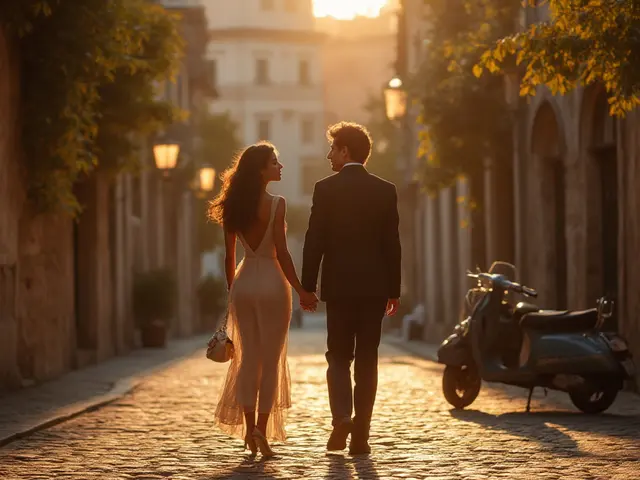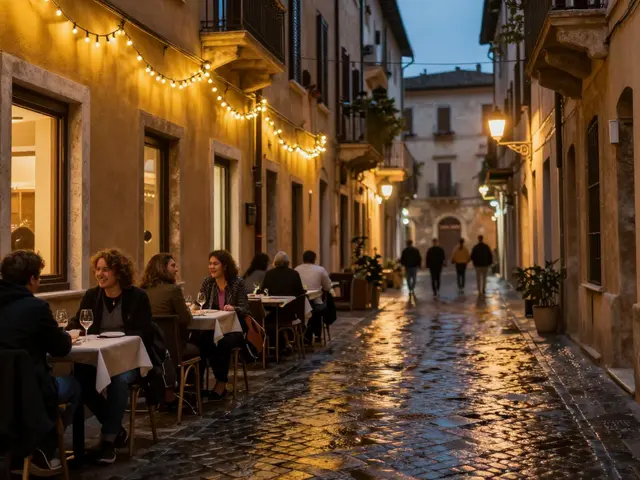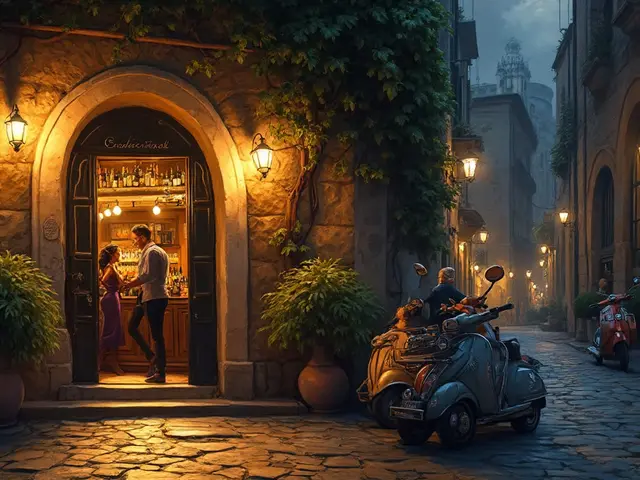
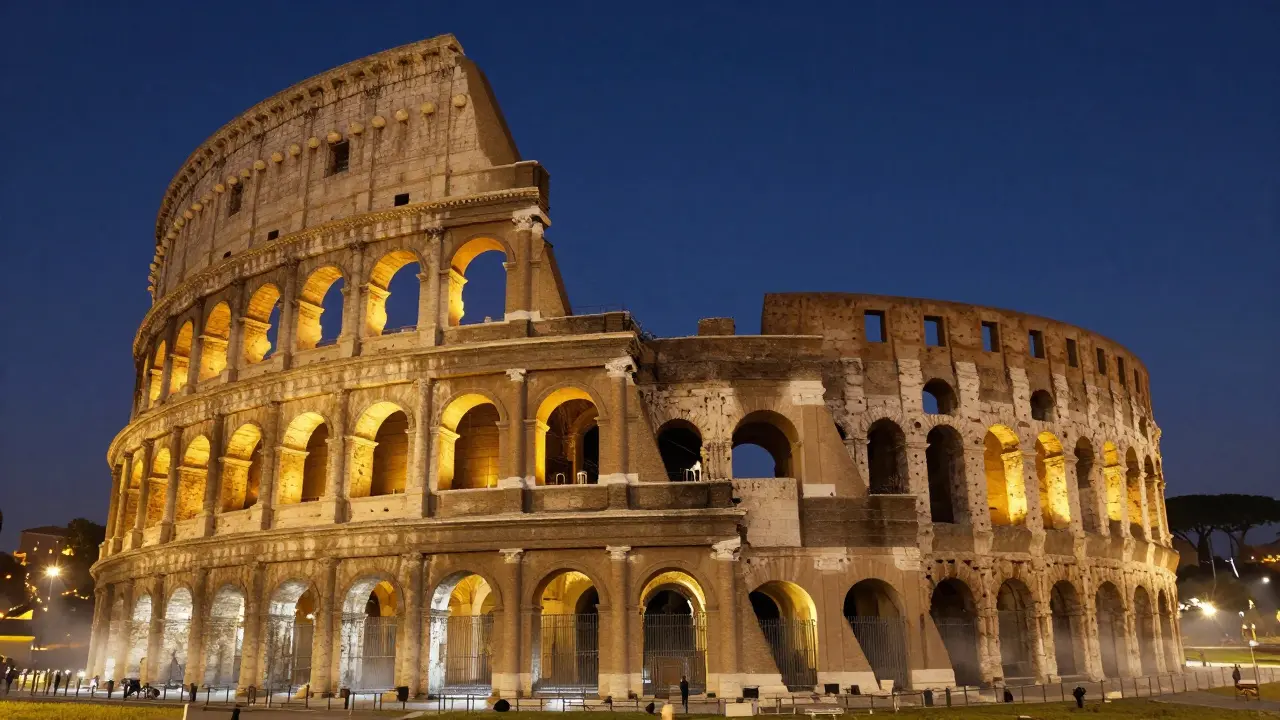
There’s something about Rome after sunset that doesn’t show up in any guidebook. The Colosseum doesn’t just stand there-it glows. The Trevi Fountain doesn’t just sparkle-it sings. And the streets? They breathe. You don’t just visit Rome at night. You live it.
The City That Never Sleeps, But Whispers
Rome doesn’t turn into a party city when the sun goes down. It transforms. The crowds thin out, the heat fades, and the ancient stones start to tell stories you can’t hear in daylight. Walk through Piazza Navona after 9 p.m. and you’ll hear street musicians playing old Italian ballads-not the tourist covers, but the real ones. The air smells like espresso, grilled artichokes, and the faintest hint of incense from a nearby church still open for evening prayers.
It’s not about clubs or loud bars. It’s about the rhythm. The way locals linger over aperitivo at Campo de’ Fiori, sipping Aperol Spritz with a plate of crostini. The way couples sit on the steps of the Spanish Steps, not taking selfies, just watching the world pass by. You’ll see grandmas walking their dogs past the Pantheon. Teenagers laughing under the arches of Via dei Coronari. No one’s rushing. No one’s checking their phone. Everyone’s just… there.
The Icons, Reimagined
Everyone knows the Vatican at noon. But have you seen St. Peter’s Basilica at midnight? The dome is lit from below, casting a golden halo over the square. The crowds are gone. The only sounds are distant footsteps and the echo of a lone accordion player near Piazza Risorgimento. You can stand right under the colonnade, looking up, and feel like you’re the only person in the city.
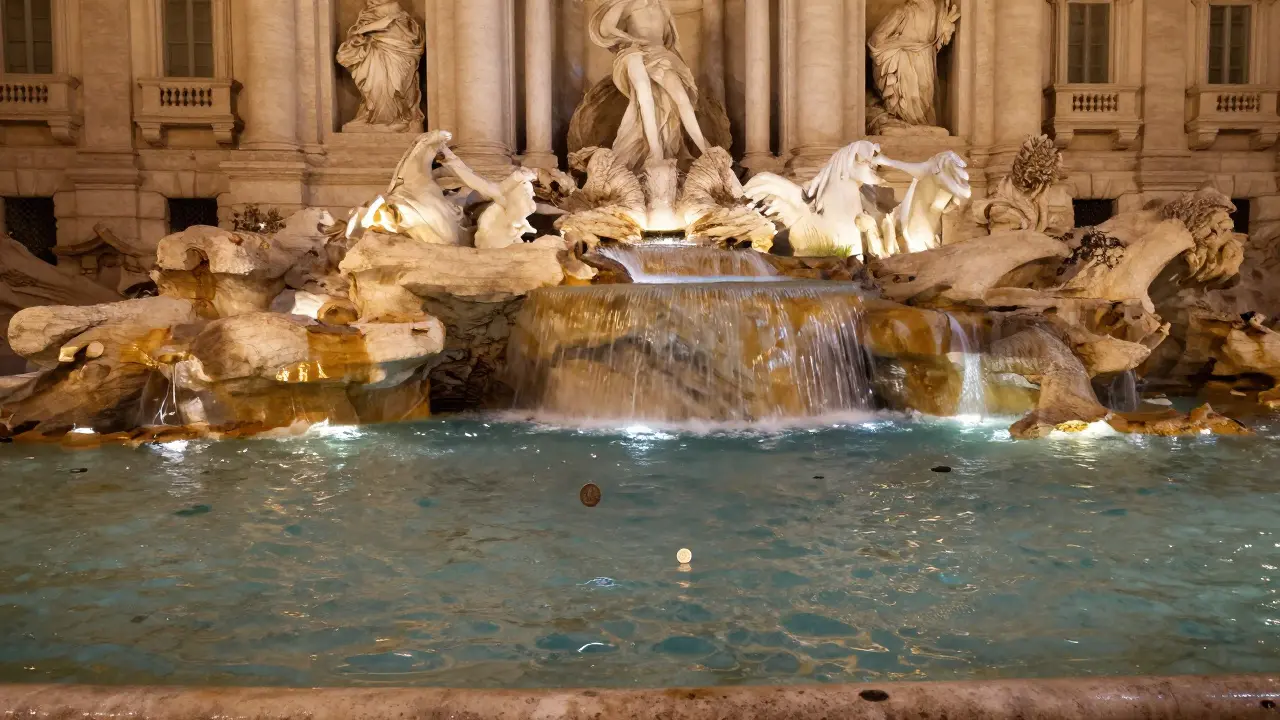
The Trevi Fountain? Don’t go at 7 p.m. when it’s packed with selfie sticks. Wait until 11 p.m. The fountains are still running, the water still sparkling under the lamps. You can toss your coin without elbowing someone. And if you’re quiet enough, you’ll hear the water whisper as it falls-like it’s telling you something.
The Pantheon? Open until 11 p.m. on weekends. Step inside, and the oculus above you is still open to the night sky. No tour groups. No flash photography. Just you, the ancient concrete, and the stars peeking through. This isn’t a museum. It’s a temple that still works.
Where the Real Food Happens
Rome’s best meals don’t happen in restaurants with three Michelin stars. They happen in tiny trattorias tucked into side streets, where the menu is written on a chalkboard and the owner knows your name by the third visit.
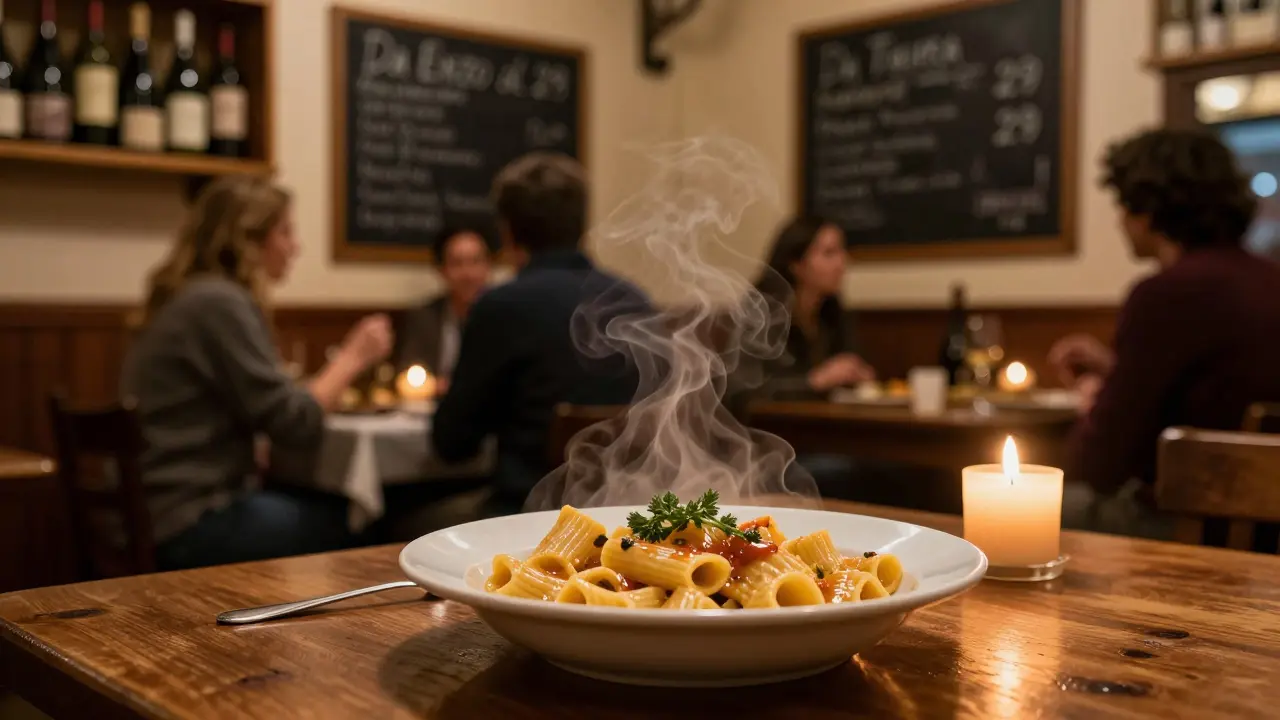
Head to Trattoria Da Enzo al 29 in Trastevere after 9:30 p.m. The pasta is made fresh every hour. The carbonara? No cream. Just eggs, cheese, pepper, and guanciale. It’s served in a bowl so hot it steams your glasses. Order the rigatoni alla pajata-offal, but done right. You won’t find it on any tourist menu.
Or try Supplizio in Monti. They serve fried rice balls stuffed with mozzarella and ragù. You can eat them standing at the counter, dusted with parmesan, while the owner tells you which wine pairs best with each one. No reservations. No menu. Just a line of locals and one question: “Vuoi provare?”
And don’t forget the gelato. Not the tourist traps with neon colors. Go to Giolitti near the Pantheon. The pistachio? Made with real nuts. The ricotta and fig? A secret recipe from Sicily. Eat it slowly. Let it melt. That’s the ritual.
The Hidden Corners You Won’t Find on Google Maps
There’s a hidden garden behind the Church of Santa Maria in Trastevere. No sign. Just a narrow alley and a wooden gate. Step inside, and you’re in a secret courtyard with lemon trees, fountains, and a bench where Roman poets used to sit. It’s open until midnight.
Down by the Tiber River, past the Ponte Sant’Angelo, there’s a stretch of cobblestone path where locals go to smoke, talk, and watch the water ripple under the bridge lights. No tourists. No cameras. Just the sound of the river and the occasional laugh.
And then there’s the Testaccio Market at night. Not the daytime food hall. The night version. After 8 p.m., the stalls turn into pop-up wine bars. Local vintners pour samples of Montepulciano and Frascati. You pay €3 for a glass and a small plate of pecorino. No one speaks English. But they’ll smile, raise their glass, and say “Salute.”
How to Do It Right
You don’t need a tour guide. You don’t need a map. You need two things: time and curiosity.
- Start at sunset. Walk from Piazza del Popolo toward the Tiber. Let the city reveal itself.
- Ditch the phone. Use it to take one photo. Then put it away. The rest? Remember it.
- Wear comfortable shoes. You’ll walk more than you think.
- Carry a small coin. Not for the fountain. For the bus. Or the gelato. Or the stranger who offers you a sip of their wine.
- Don’t chase the “Instagram spots.” Find the quiet ones. The ones with no signs.
And if you get lost? Good. That’s when you find the real Rome.
When to Go
Spring and fall are perfect. April and October mean mild nights, open-air cafes, and no humidity. Summer? It’s hot. But if you go, start late-after 10 p.m. The streets cool down. The air clears. And the city feels alive again.
Winter? Quiet. But magical. The lights on the bridges reflect off the Tiber. The fountains are frozen at the edges. And the churches? They’re warmer inside. You’ll find people praying, not posing.
What to Skip
Forget the rooftop bars with €25 cocktails. They’re for people who want to say they were in Rome-not feel it.
Don’t go to Piazza Navona at 8 p.m. for the street artists. Go at 10:30 p.m. for the music. The real stuff.
And skip the guided night tours. They’re scheduled. Predictable. Soulless. You don’t need someone telling you what to feel. You just need to be there.
The Dream Isn’t a Place. It’s a Feeling.
Rome at night isn’t about seeing landmarks. It’s about hearing silence in a city that’s loud all day. It’s about finding a bench in the shadow of a 2,000-year-old arch and realizing you’re not just a visitor-you’re part of the story now.
You’ll leave with no souvenirs. But you’ll carry something heavier: the memory of a quiet moment under the stars, the taste of real pasta, the sound of a stranger’s laugh echoing off ancient stone.
That’s Rome at night. Not a place you visit. A dream you live.
Is Rome safe at night?
Yes, Rome is generally safe at night, especially in the main tourist areas like Trastevere, Monti, and the historic center. Stick to well-lit streets, avoid isolated alleys after midnight, and keep an eye on your belongings-just like in any big city. The biggest risk isn’t crime. It’s distraction. People get so caught up in the beauty that they forget to notice their surroundings. Stay aware, but don’t be afraid. The locals are used to night walkers, and they’ll often point you in the right direction if you look lost.
What time do restaurants close in Rome?
Most restaurants in Rome stay open until midnight or later, especially in areas like Trastevere, Testaccio, and Campo de’ Fiori. Dinner service typically starts around 8 p.m. and runs until 11 p.m. or 11:30 p.m. Many places have a second service for late-night diners, especially on weekends. If you’re hungry after midnight, look for trattorias that say “aperto fino a tardi” or ask for “cucina notturna.” Some gelaterias and pizzerias stay open until 2 a.m.
Can I visit the Colosseum at night?
Yes, the Colosseum offers night tours during spring, summer, and early fall. These are limited, bookable only through the official website, and require a ticket. The experience is unforgettable-walk through the arena under the stars, with guided lighting that highlights the ancient stonework. The sound of wind echoing through the arches is unlike anything you’ll hear in daylight. Tours last about 90 minutes and start after 8:30 p.m. Check the official Parco Archeologico del Colosseo website for dates and availability.
Do I need to speak Italian to enjoy Rome at night?
No, but a few words go a long way. Saying “grazie,” “per favore,” or “buona sera” earns you smiles and sometimes extra servings. Most people in restaurants and shops speak some English, especially in tourist zones. But if you head to local spots-like Testaccio’s wine bars or the backstreets of Monti-you’ll find that Italians appreciate the effort. A simple “C’è un buon vino qui?” (“Is there good wine here?”) opens doors. You don’t need fluency. Just politeness.
What’s the best way to get around Rome at night?
Walking is the best option. Most of Rome’s magic is within a 3-kilometer radius of the historic center. If you need to go farther, the metro runs until midnight on weekdays and 1:30 a.m. on weekends. Night buses (called “notturni”) operate after that, with routes marked by an “N” before the number. The N1, N2, and N3 connect major areas like Termini, Piazza Navona, and Trastevere. Taxis are reliable but expensive. Uber doesn’t work here-use FreeNow or local taxi apps instead.