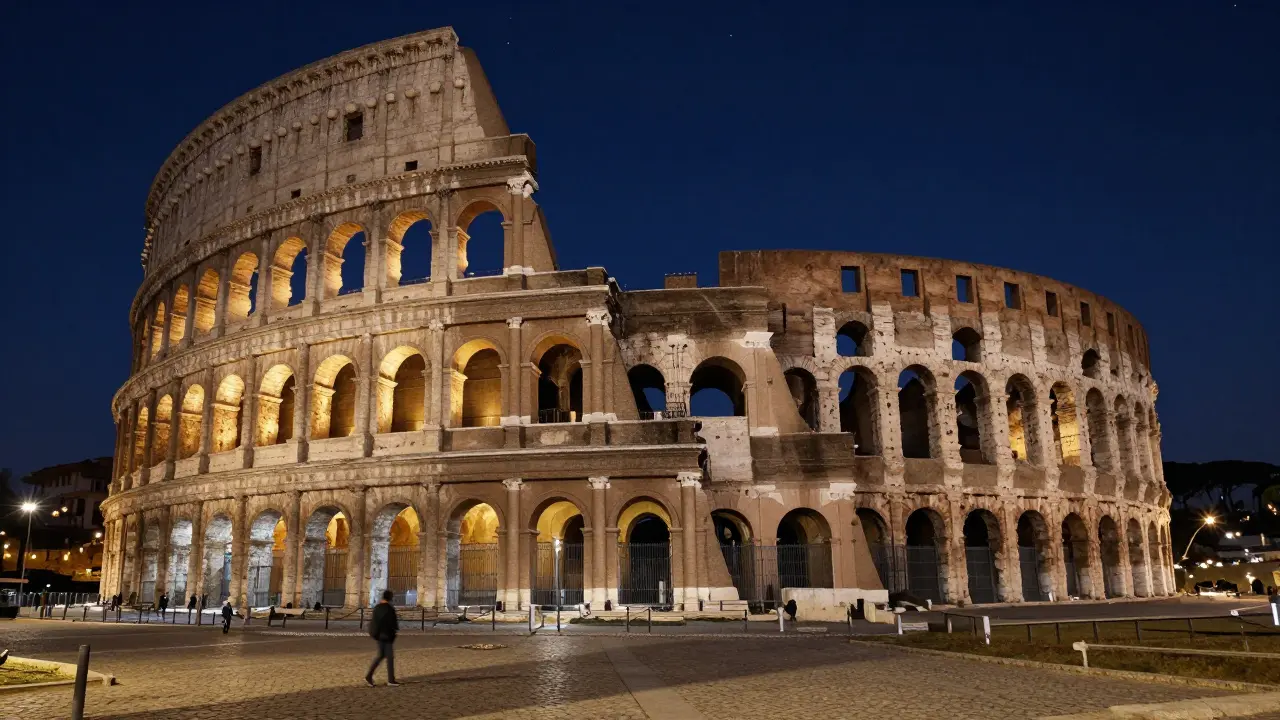
Walk through the Colosseum at 9 p.m. and you won’t see tour groups or selfie sticks. You’ll hear your own footsteps echoing under ancient arches, and the moon casting long shadows across stone that’s seen emperors, gladiators, and now, just you. Rome by night isn’t a different city-it’s the same one, stripped of the noise, the heat, and the crowds. What’s left is magic you can’t get during the day.
Where the Lights Turn On
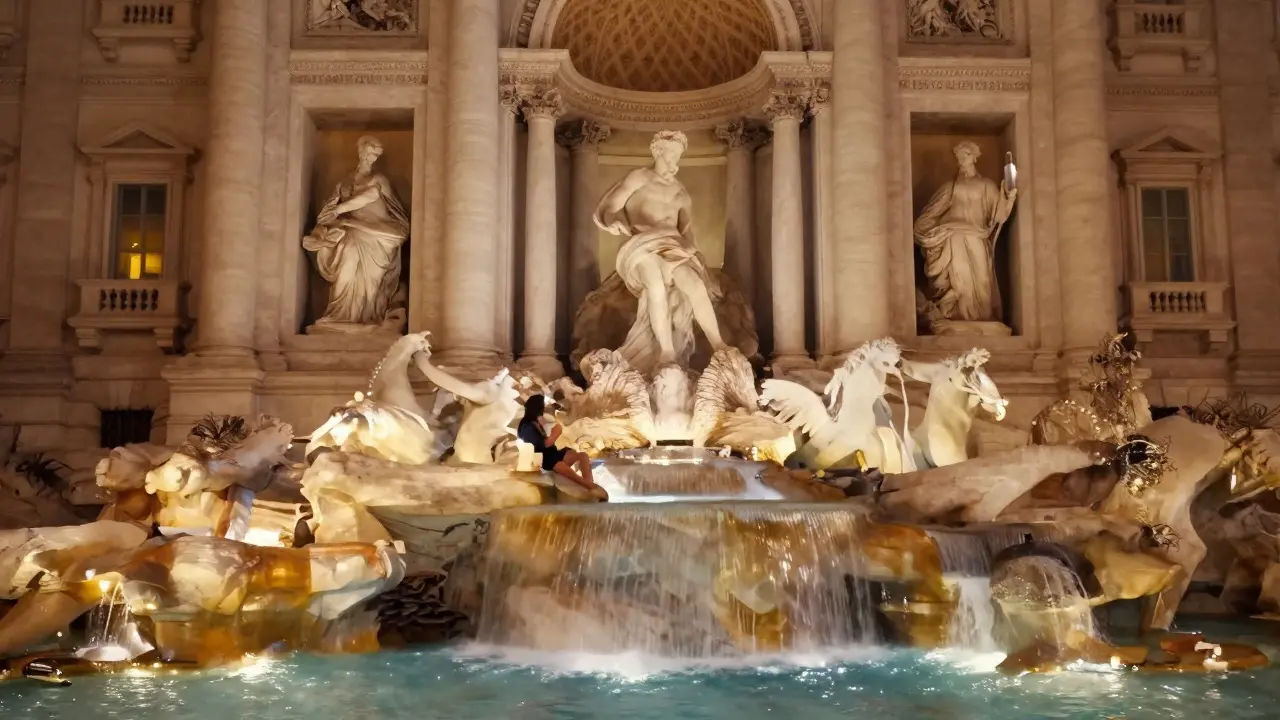
The Trevi Fountain doesn’t stop being beautiful when the sun sets-it gets better. At night, the water glows under golden spotlights, and the statue of Neptune looks like it’s rising from liquid silver. You’ll still find people tossing coins, but now they’re quieter, more deliberate. Locals say the best time to make a wish is right after the last tourist leaves. Around 10:30 p.m., the crowd thins. That’s when you can actually hear the water.
Don’t just snap a photo and leave. Sit on the steps nearby. Order a gelato from La Grotta di Troia-they stay open until midnight-and watch the fountain change with the light. It’s not crowded. It’s not loud. It’s just you and 2,000 years of history, lit up like a movie.
Trastevere After Dark
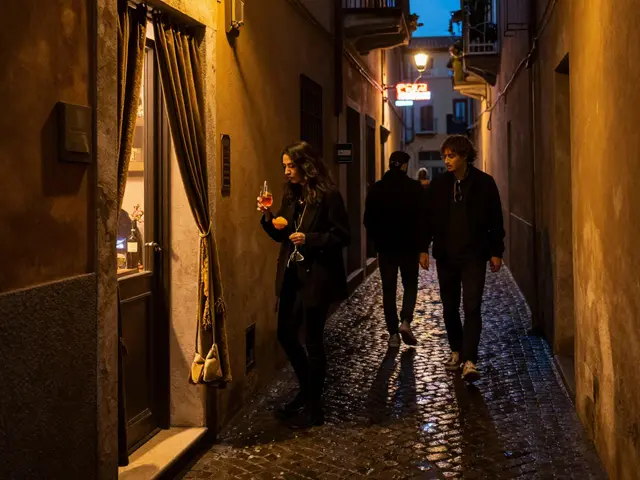
Trastevere turns into a living postcard after sunset. Cobblestone streets glow under string lights. Windows spill warm light onto the sidewalks, and the smell of garlic, basil, and wood-fired pizza fills the air. But this isn’t the same Trastevere you saw at 3 p.m., when every table was taken and every waiter was rushing.
At night, the real locals come out. The trattorias with no signs, the ones with handwritten menus taped to the door, the ones where the owner asks where you’re from and then brings you a free glass of red wine. Try Da Enzo al 29-it’s small, it’s loud, and it’s always full. But if you arrive after 9:30 p.m., you might actually get a table without a 45-minute wait.
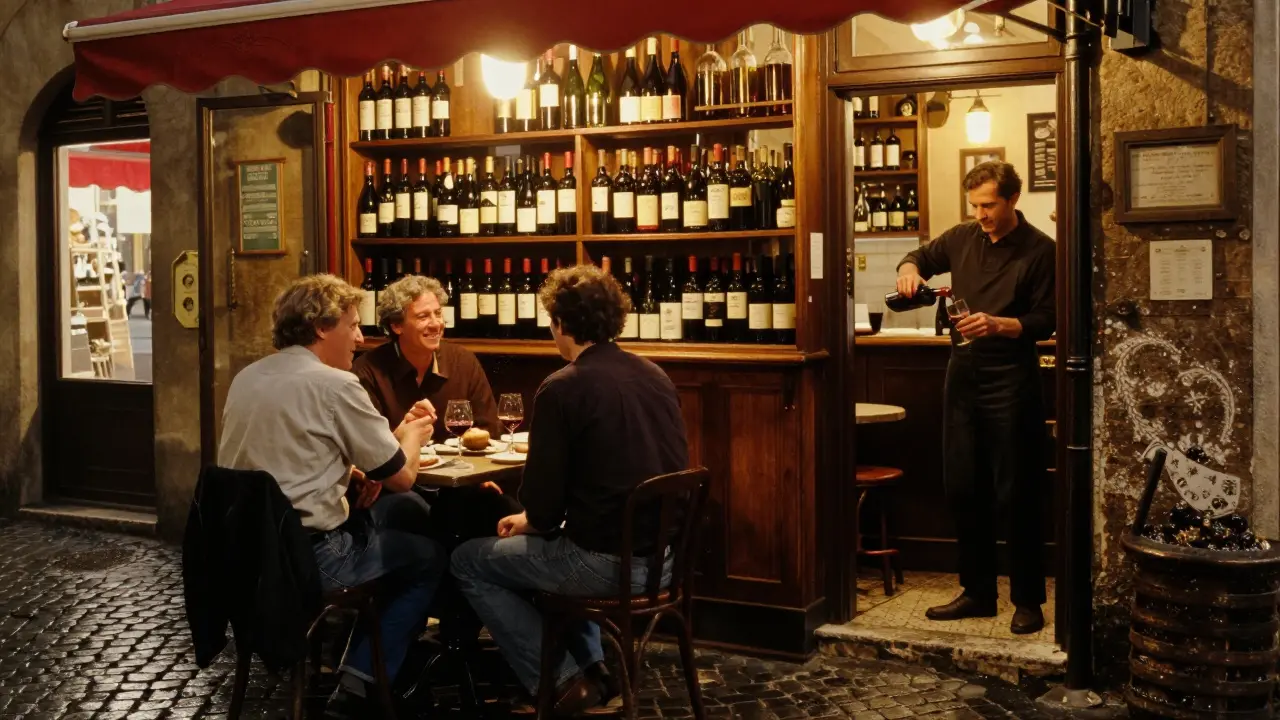
Walk down Via della Scala, then turn onto Vicolo del Bologna. Find the tiny bar with the red awning. Order an Aperol spritz. Watch the neighborhood breathe. This isn’t a tourist zone. It’s a neighborhood that only reveals itself when the sun goes down.
The Vatican After Hours
Most people don’t know the Vatican Museums open for evening tours. Not the full tour. Not the Sistine Chapel at noon. But a quiet, guided walk through the galleries after 7 p.m., when the crowds are gone. You’ll see Raphael’s Rooms without jostling for a view. You’ll stand under the ceiling of the Sistine Chapel without a hundred phones pointed at you.
The lighting is softer. The silence is deeper. You can actually hear your own breath as you look at Michelangelo’s Creation of Adam. It’s not just a painting-it’s a moment. And you’re the only one there to feel it.
Book these tours months in advance. They sell out. But if you get in, it’s worth every euro. No other city lets you walk through one of the greatest art collections on earth without the noise of a thousand cameras.
Where the Romans Really Drink
Forget the bars near Piazza Navona. The ones with English menus and $12 cocktails. The real Roman night happens in the back rooms of wine bars tucked into alleyways. These places don’t have websites. You find them by following the sound of laughter and clinking glasses.
Enoteca Corsi has been open since 1923. No one takes reservations. Just walk in. Order a glass of Cesanese del Piglio. Ask for the house wine. They’ll pour you a taste. You’ll be talking to the owner in five minutes. He’ll tell you which vineyard his grandfather used to buy from. You’ll leave with a new favorite wine and a story you won’t forget.
Or try Pro Loco Pinciano near Piazza Fiume. It’s not fancy. It’s not Instagrammable. But it’s where Roman professionals come after work. You’ll see lawyers, artists, and teachers drinking natural wine and eating cured meats. No one’s posing. Everyone’s relaxed.
Stroll Along the Tiber
At night, the Tiber River becomes Rome’s quietest promenade. The bridges-Ponte Sant’Angelo, Ponte Mazzini, Ponte Garibaldi-are lit up like bridges in a dream. You can walk from Castel Sant’Angelo all the way to Piazza Trilussa without hearing a car horn.
Stop at Ponte Sant’Angelo. Look back toward the Vatican. The dome glows against the dark sky. Turn around. See the flickering lights of Trastevere in the distance. This is the city’s heartbeat, visible from the water.
Bring a scarf. It gets cool after 10 p.m. Sit on the edge of the riverbank near Ponte Sisto. Watch the boats drift by. Some are private, some are tourist cruises, but at night, they all feel like secrets.
What to Avoid
Not every part of Rome feels safe after dark. Stick to the well-lit, well-trodden paths. Avoid the area around Termini Station after 11 p.m.-it’s not dangerous, but it’s sketchy. Don’t wander into the industrial zones near Ostiense unless you know exactly where you’re going.
And skip the fake “Rome by Night” tours that take you to the same spots as the daytime ones, just with flashlights. Real Rome after dark doesn’t need gimmicks. It just needs time.
When to Go
Spring and fall are perfect. April, May, September, October. The weather is mild, the crowds are gone, and the city feels alive without being overwhelming. Summer nights are hot and sticky. Winter nights are crisp, but some places close early.
If you’re here in December, you’re in luck. The Christmas lights turn on in early November and stay up until Epiphany. The Piazza Navona ice rink is open. The markets glow with lanterns. The air smells like roasted chestnuts. It’s not the Rome of summer-but it’s the Rome of memory.
Your Evening Pass Checklist
- Wear comfortable shoes-you’ll walk 10,000 steps before midnight.
- Bring a light jacket. Even in summer, the night air drops 10 degrees.
- Carry cash. Many small bars and trattorias don’t take cards after hours.
- Book Vatican evening tours at least 2 months ahead.
- Ask locals for their favorite spot. They’ll take you somewhere no guidebook mentions.
- Don’t rush. Rome by night isn’t a checklist. It’s a feeling.
Is Rome safe at night?
Yes, most central areas like Trastevere, the historic center, and the Vatican are perfectly safe at night. Stick to well-lit streets, avoid isolated alleys near train stations, and don’t flash expensive gear. Romans are used to tourists walking around after dark. Just use common sense-you wouldn’t wander into a dark alley in any major city.
What’s the best time to visit the Colosseum at night?
The Colosseum offers limited night tours from April to October, usually starting at 8:30 p.m. These are the only times you can walk inside after dark. Book through the official website. The experience is quiet, atmospheric, and unlike anything you’ll see during the day. No crowds. Just the stones and the stars.
Can I see the Pantheon at night?
Yes. The Pantheon is open until 7:30 p.m. in winter and 7 p.m. in summer, but you can still stand outside and admire it after hours. The dome is lit from below, and the square around it is empty. It’s one of the most photographed spots in Rome at night-because it looks like it’s floating in the dark.
Are there any free nighttime activities in Rome?
Absolutely. Walk the Tiber River. Watch the Trevi Fountain glow. Stroll through Piazza Navona under the Christmas lights. Sit on the Spanish Steps and listen to a street musician. All of these cost nothing. Rome’s beauty doesn’t require a ticket-it just requires you to be there after dark.
What’s the best way to get around Rome at night?
Most attractions are within walking distance in the historic center. If you need to go farther, take the night bus (N line). The N1, N2, and N3 run every 20-30 minutes until 5 a.m. Taxis are reliable and reasonably priced. Avoid ride-share apps-they’re not widely used here. The city’s public transport at night is simple, safe, and efficient.
Next Steps
Start planning your evening now. Pick one spot-Trevi, Trastevere, or the Vatican-and go. Don’t try to do it all. Rome by night isn’t about checking boxes. It’s about letting the city reveal itself slowly, one quiet moment at a time.
Bring your curiosity. Leave your phone in your pocket sometimes. And when you find that hidden bar with the red awning? Sit down. Order a glass of wine. Let the night do the talking.