When you step into Rome, you don’t just visit a city-you walk through 2,800 years of history. The streets aren’t paved with just cobblestones; they’re layered with emperors, popes, artists, and revolutionaries. You can stand where gladiators once fought, kneel where saints prayed, and eat pasta where farmers once traded grain. There’s no filter here. Rome doesn’t need to be marketed. It just is.
Start at the Colosseum-Then Forget It Exists
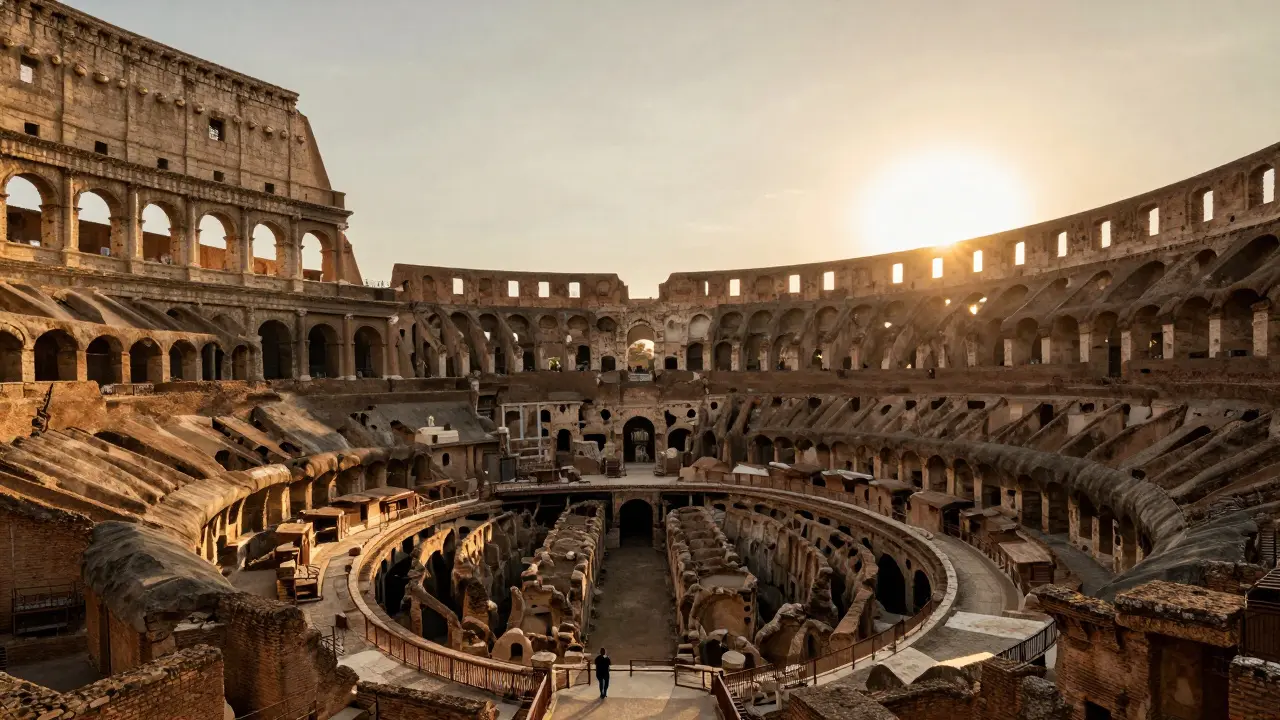
The Colosseum is the poster child of Rome, and for good reason. Over 50,000 spectators once packed its stands to watch lions fight men, men fight men, and men fight the odds. Today, you can walk the same underground tunnels where beasts were held before being hoisted into the arena. The structure is half-ruined, but that’s what makes it powerful. You’re not looking at a restored museum piece-you’re looking at time itself crumbling under the weight of centuries.
Most people rush through it in 30 minutes. Skip that. Spend two hours. Climb to the top tier. Look down at the arena floor. Then turn around and see the Roman Forum stretching out behind you. That’s not a coincidence. The Colosseum was built to distract. The Forum was where the real power lived. One was spectacle. The other was politics. Together, they tell you everything about Rome.
Walk Through the Roman Forum-Where Democracy Was Born and Died
Just beyond the Colosseum, the Roman Forum is a maze of broken columns, cracked steps, and silent temples. This wasn’t a park. It was the beating heart of the Republic. Here, Cicero gave speeches that moved empires. Here, Julius Caesar was cremated after his assassination. Here, senators argued over taxes, wars, and who got to rule next.
Look for the Temple of Saturn. Its remaining columns are among the most photographed in Rome. But don’t stop there. Find the Arch of Septimius Severus. Trace the path of the Sacred Way-the road where victorious generals rode in parades. Now, it’s just a dirt path with tourists taking selfies. That’s the magic of Rome: the grandest moments in human history happened right where you’re standing, and now it’s just another spot to take a lunch break.
Get Lost in the Pantheon-The Building That Defied Time
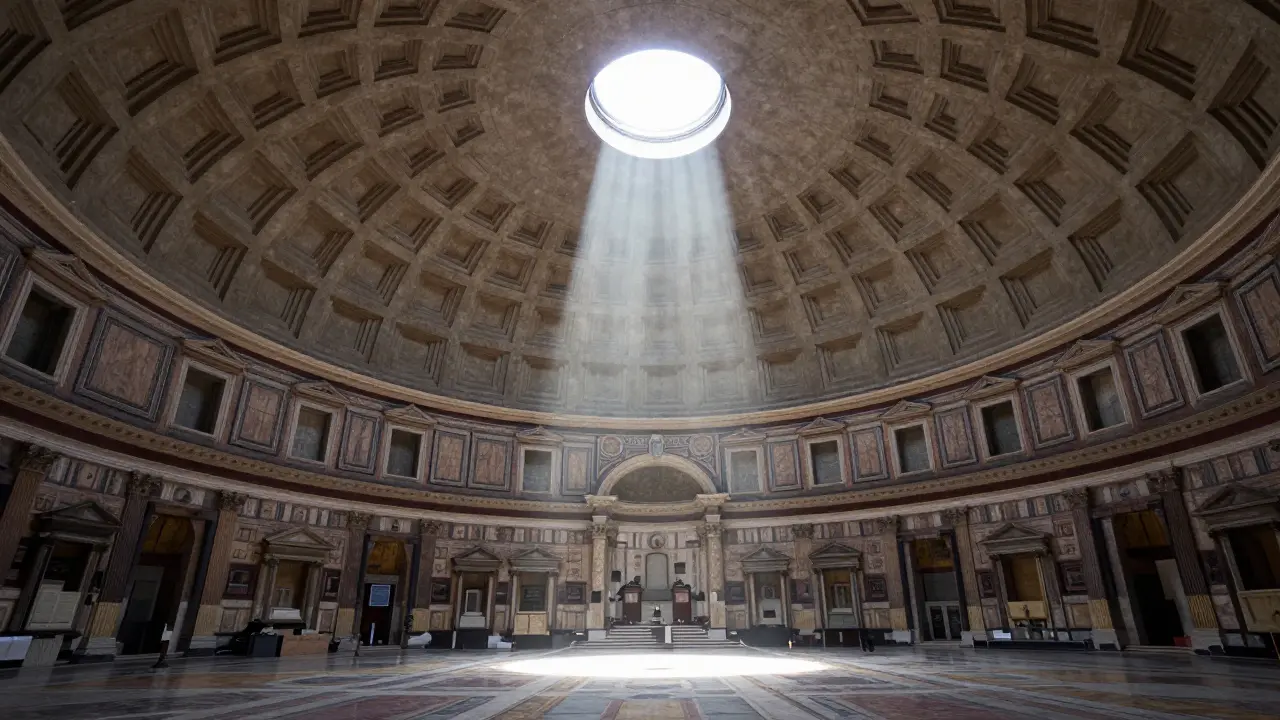
The Pantheon isn’t just old. It’s the oldest building in the world still in regular use. Built in 126 AD, its dome is still the largest unreinforced concrete dome ever made. No one knows exactly how the Romans did it. Modern engineers still study it. The oculus-the hole at the top-lets in rain, sunlight, and centuries of sky. On sunny days, a single beam of light sweeps across the floor like a divine spotlight.
Inside, you’ll find the tombs of Raphael and two Italian kings. But you won’t see them unless you look. The real miracle is the space itself. Walk to the center. Look up. Feel the weight of the dome above you. It’s not heavy. It’s light. That’s the secret of Roman engineering: they didn’t build to last. They built to feel eternal.
Stand in St. Peter’s Square-Where Faith and Power Collide
The Vatican isn’t just a church. It’s a city-state with its own army, bank, and postal service. St. Peter’s Basilica dominates the skyline, but the real drama happens in the square. Bernini designed the colonnades to look like arms reaching out to embrace the faithful. They also hide a secret: if you stand on the right spot, you can see all four sides of the basilica at once. It’s an optical trick meant to make you feel small-and important at the same time.
Inside the basilica, Michelangelo’s Pietà sits behind bulletproof glass. The Virgin Mary holds her dead son. Her face is calm. Her hands are smooth. The marble looks like skin. It’s the only thing Michelangelo ever signed. He carved it when he was 24. He later regretted it. He didn’t want to be known for beauty. He wanted to be known for truth.
Climb the Spanish Steps-But Don’t Sit on Them
The Spanish Steps are where Romans go to be seen. Tourists go to take pictures. Locals go to people-watch. The 135 steps connect Piazza di Spagna to the Trinità dei Monti church. They were built in 1723 to impress French diplomats. Now, they’re the most crowded spot in Rome after sunset.
Don’t sit on them. It’s illegal. Fines start at €250. But if you climb to the top, you’ll find a quiet garden with a view of the city that doesn’t appear in any guidebook. From there, you can see the dome of the Pantheon, the tower of the Capitoline, and the distant hills where ancient Romans buried their dead. It’s the same view that poets and painters saw. You’re not just looking at Rome. You’re seeing what they saw.
Find the Trevi Fountain-And Make a Wish That Actually Matters
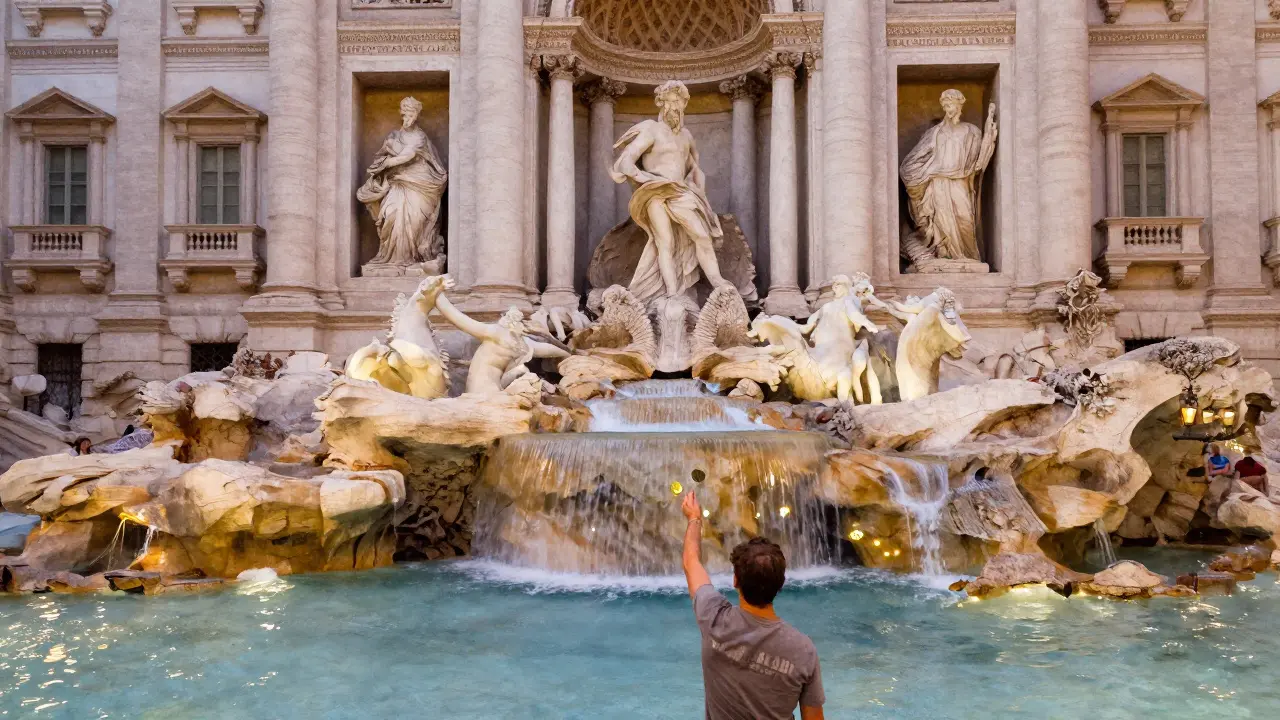
The Trevi Fountain isn’t just beautiful. It’s a machine. Every day, over 3,000 euros in coins are pulled from its waters. That’s over a million euros a year. Most of it goes to charity. The rest? It pays for Rome’s fountains.
Stand at the edge. Toss a coin over your shoulder with your right hand. That’s the rule. If you do it right, you’ll come back. If you toss two, you’ll fall in love with someone from Rome. If you toss three, you’ll leave Rome-and never want to return.
But here’s the truth: the real magic isn’t in the coin. It’s in the moment. You’re standing in front of a 260-year-old statue of Neptune, surrounded by angels and sea horses, with water crashing behind you. You’re not just making a wish. You’re connecting to every other person who’s ever stood here, hoping for something better. That’s the power of Rome. It turns superstition into memory.
Eat Like a Local-Not Like a Tourist
Rome’s food isn’t about pasta carbonara in fancy restaurants. It’s about cacio e pepe at 7 p.m. in a tiny trattoria with no menu. It’s about supplì-fried rice balls with molten mozzarella inside-eaten standing up at a bar. It’s about porchetta sandwiches bought from a cart near Testaccio Market.
Go to the Testaccio neighborhood. It’s not on most maps. Locals go there for the food, not the view. The market is open every day except Sunday. Buy a slice of pizza bianca. Eat it while walking. Find a bench near the Pyramid of Cestius. Sit. Watch the pigeons. Taste the salt. Feel the sun. This is what Romans do when they’re not working. They eat. They sit. They breathe.
Visit the Catacombs-Where Death Became a Celebration
Underneath Rome, there are 400 miles of tunnels carved into volcanic rock. These are the catacombs. Early Christians buried their dead here because they couldn’t afford land above ground. They painted frescoes on the walls. They carved symbols of hope: a dove, a fish, a shepherd. They didn’t fear death. They believed in resurrection.
Today, you can walk through the Catacombs of San Callisto or San Sebastiano. The air is cool. The walls are damp. The silence is thick. You’ll see niches where bodies were laid to rest. Some still have names carved into the stone. You’ll feel the weight of belief-not religion, but the idea that something survives beyond the body.
Take a Day Trip to Ostia Antica-Rome’s Forgotten City
Most tourists never leave the city center. That’s a mistake. Just 30 minutes by train, Ostia Antica is the ancient port of Rome. It’s bigger than Pompeii. It’s quieter. And it’s completely untouched by crowds.
Walk down the original Roman streets. See the mosaic floors of brothels, bakeries, and bathhouses. Find the thermopolium-a fast-food counter where people bought hot stew. Look up. The apartment buildings still have balconies. You can almost hear the merchants shouting, the children playing, the waves crashing in the distance.
This is what Rome looked like when it was alive-not a museum, not a postcard, but a real city. The same city that built the Colosseum, the Pantheon, and the aqueducts. Ostia Antica doesn’t try to impress you. It just shows you what Rome really was: ordinary people doing extraordinary things.
Don’t Try to See It All
Rome isn’t a checklist. You can’t do it in a day. You can’t do it in a week. You can’t even do it in a month. The city doesn’t reward speed. It rewards presence.
Forget the guidebook. Skip the audio tour. Sit on the steps of Santa Maria in Trastevere. Watch the light change on the orange trees. Let yourself get lost in a side street where no one speaks English. Find a bar with a single sign that says “Caffè.” Order an espresso. Don’t rush. Let the caffeine settle. Let the silence settle.
Rome doesn’t need you to see everything. It just needs you to feel something. And if you do, you’ll come back. Not because you missed something. But because you found something you didn’t know you were looking for.
What is the best time of year to visit Rome?
The best times are April to June and September to October. The weather is mild, the crowds are thinner, and the light is perfect for photos. July and August are hot and packed. Winter is quiet but chilly-perfect if you like museums and fewer people.
How many days do I need to see Rome?
Three days is enough to see the major sites, but five gives you time to wander, eat slowly, and discover hidden corners. If you have a week, take a day trip to Ostia Antica or Tivoli. Rome rewards time, not speed.
Is it safe to walk around Rome at night?
Yes, most areas are safe after dark, especially around the historic center. Avoid isolated streets near train stations and skip the tourist traps in Trastevere after midnight. Stick to well-lit areas, and you’ll be fine. Romans walk home late-so should you.
Do I need to buy tickets in advance for the Colosseum and Vatican?
Yes. Both sites sell out daily, especially in peak season. Book tickets online at least 2-3 weeks ahead. Skip-the-line tickets are worth the extra cost. You’ll save hours standing in queues that stretch around buildings.
What should I wear in Rome?
Dress modestly in churches-cover shoulders and knees. Comfortable shoes are non-negotiable. You’ll walk 10,000 steps a day on uneven cobblestones. Light layers work best. Rome has microclimates: hot in the valley, cool on the hills. Pack a light jacket even in summer.
Next time you’re in Rome, don’t just check off the sights. Let the city breathe into you. Let the stones tell you stories. Let the silence between the crowds speak louder than any guidebook. You won’t remember every statue. But you’ll remember how it felt to be small, and ancient, and alive-all at once.