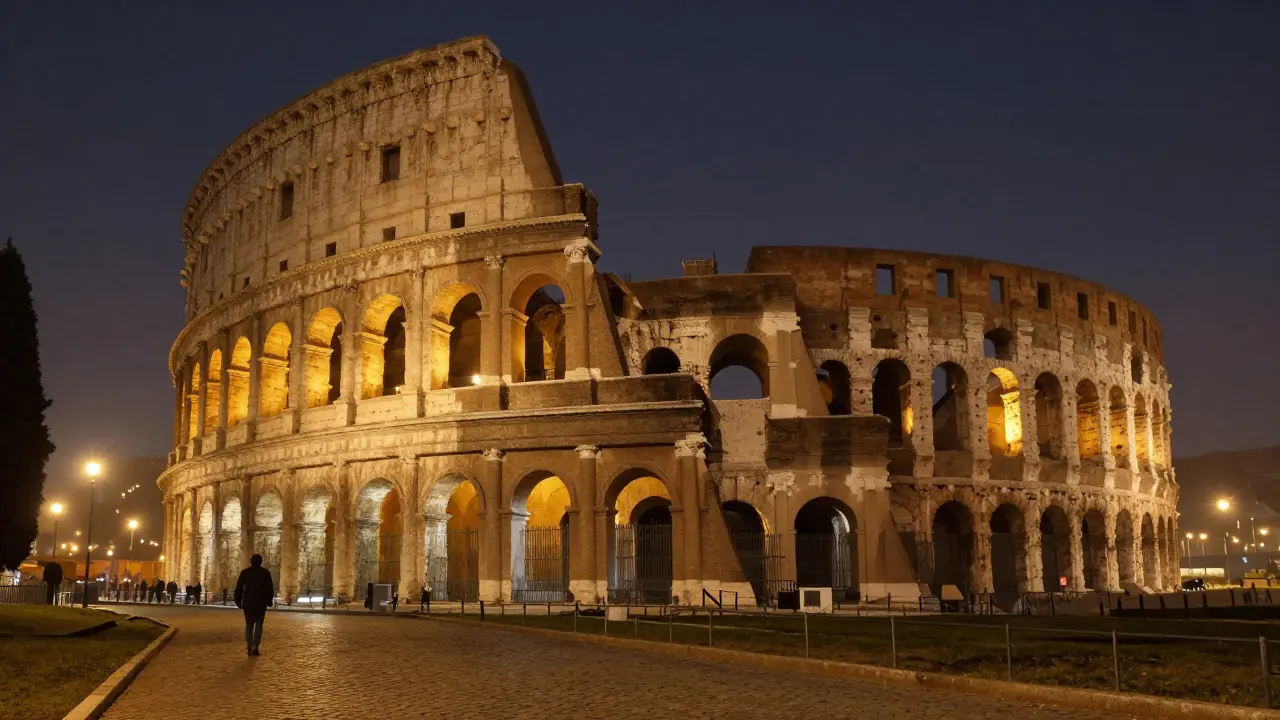
There’s something about Rome after the sun goes down that doesn’t show up in any guidebook. The Colosseum doesn’t just stand there-it glows. The Trevi Fountain doesn’t just splash-it sings. And the streets? They don’t just lead from point A to B. They whisper.
You think you know Rome from the daytime crowds, the long lines at the Vatican, the heat bouncing off ancient stone. But you don’t really know it until you’ve walked its alleys when the last tour group has vanished and the only lights left are the ones from café umbrellas and the occasional flickering streetlamp.
Where the City Breathes After Midnight
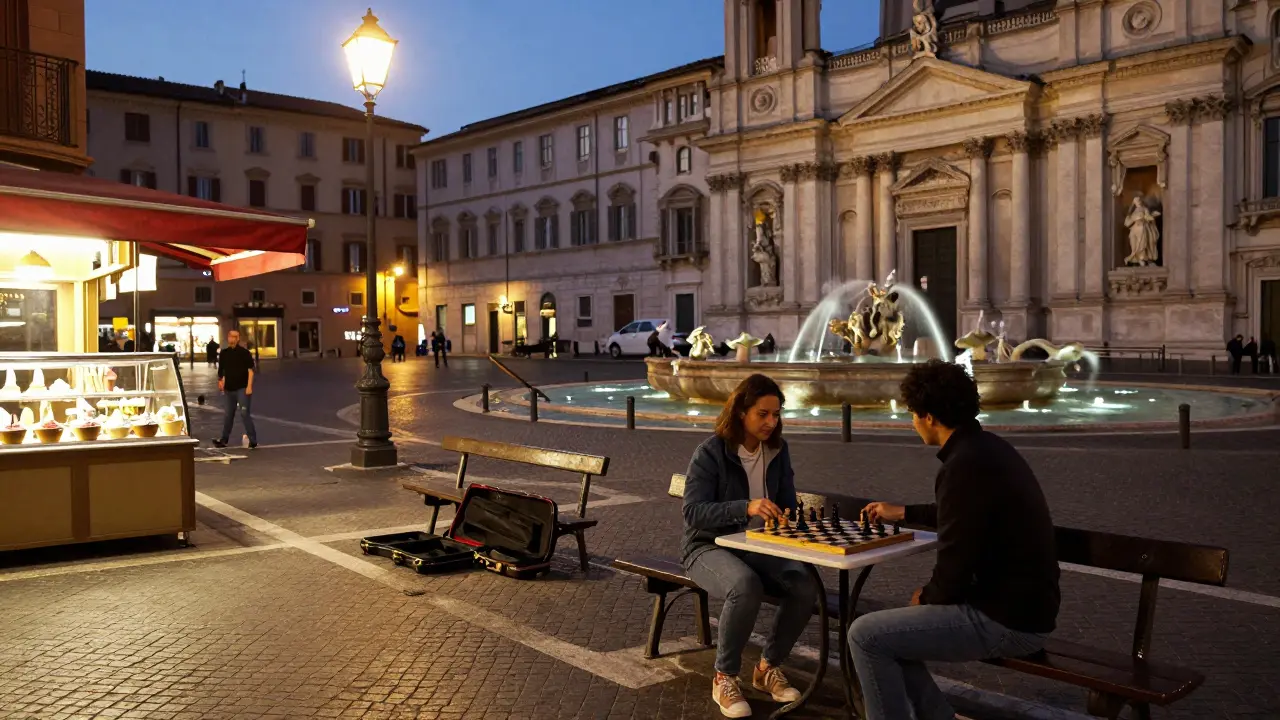
Rome doesn’t shut off at 10 p.m. It shifts. The piazzas that were packed with selfie sticks at noon become quiet stages for couples, solo travelers, and old men playing chess under lanterns. Piazza Navona at 1 a.m. isn’t empty-it’s alive in a different way. The musicians who played for euros at noon now play for silence. The gelato shop? Still open. The owner doesn’t rush you. He knows you’re not just here for the pistachio. You’re here because the night feels like it was made for you.
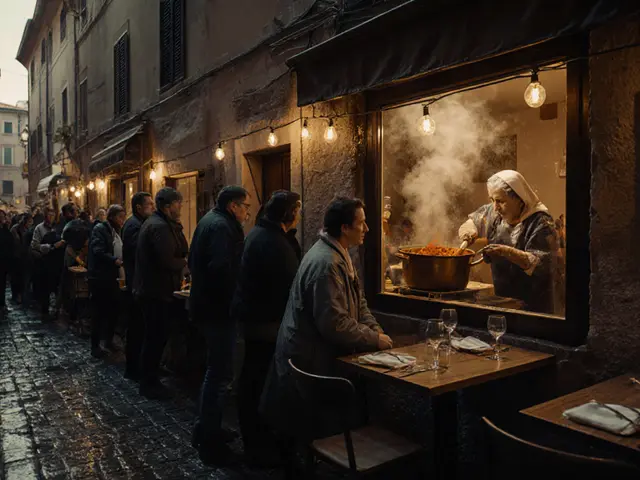
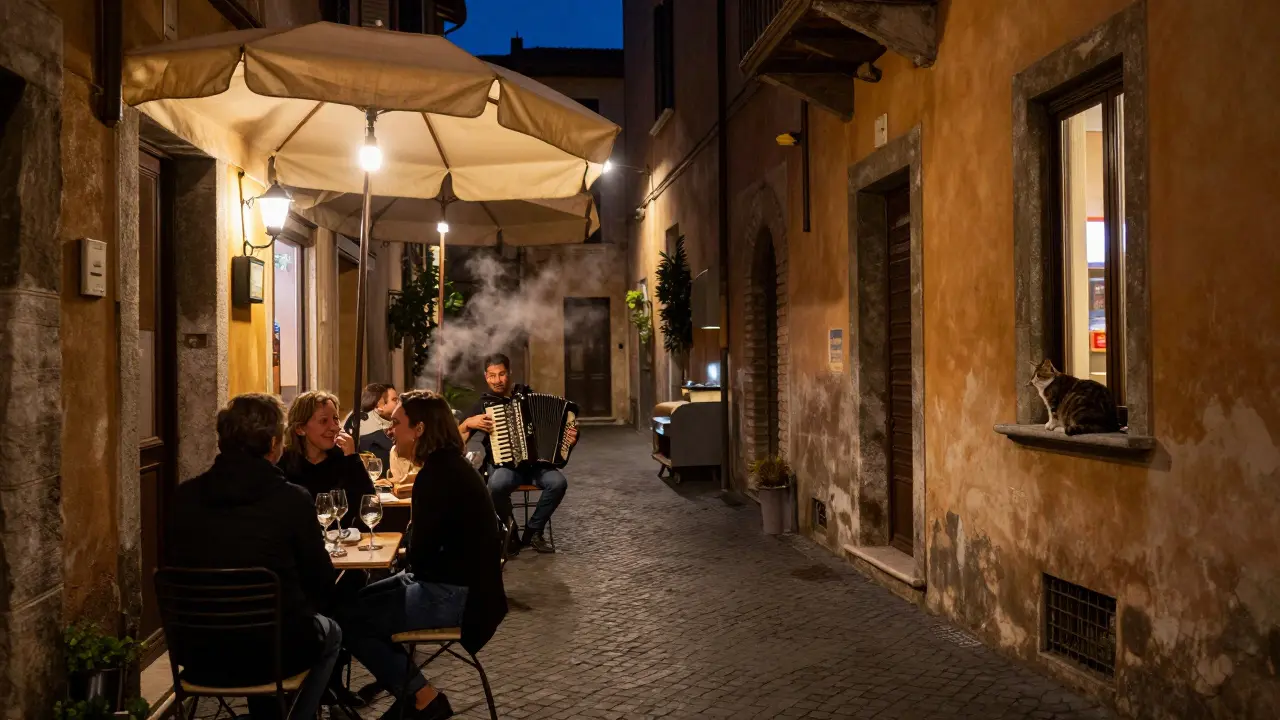
Head down to Trastevere after 9 p.m., and you’ll find locals spilling out of tiny trattorias, wine glasses clinking, laughter echoing off centuries-old walls. This isn’t a tourist zone. This is where Romans live. You’ll hear Italian, not English. You’ll see mothers tucking kids into strollers, grandfathers arguing over football, teenagers sharing a single cone of hazelnut gelato. No one’s posing. No one’s checking their phone for the next Instagram shot. They’re just living.
The Lights That Don’t Flash
Most cities light up with neon. Rome lights up with history. The Pantheon, bathed in soft gold from hidden spotlights, looks like it’s floating. The dome doesn’t need to scream for attention. It just is. Walk around it, and you’ll notice how the shadows stretch long and deep, turning columns into giants and arches into portals.
At the Spanish Steps, the stone steps glow under dim bulbs. No one’s sitting there to take photos anymore. Instead, a woman reads a book. A man smokes a cigarette, staring at the moon. A dog sleeps curled at the base of a statue. It’s not quiet-it’s reverent.
Even the Vatican’s dome, visible from the Janiculum Hill, glows like a beacon. You can climb the hill for free at night. No ticket. No line. Just you, the city below, and the sound of distant church bells. The air is cool. The view? Unmatched. You won’t find this on any travel blog. You’ll find it only if you leave your hotel after dark.
Where the Food Doesn’t Wait
Forget the 7 p.m. dinner rush. Rome’s real food scene wakes up later. In Monti, a neighborhood tucked between the Colosseum and Termini, you’ll find osterias that don’t open until 9:30 p.m. and don’t close until 2 a.m. The menu? Simple. Pasta al pomodoro. Saltimbocca. A glass of Frascati. No fancy names. No fusion nonsense. Just food that tastes like it was made by someone’s nonna.
Try Supplì at Roscioli Salumeria. It’s fried rice with mozzarella inside-crispy on the outside, gooey in the middle. You eat it standing up at the bar while the chef chats with the wine guy. No menu. Just ask. He’ll tell you what’s good. And it always is.
And don’t skip the midnight pizza. In Testaccio, Pizzeria La Boccaccia serves thin-crust pies until 3 a.m. The dough is fermented for 72 hours. The tomatoes? San Marzano. The cheese? Buffalo mozzarella from Campania. It costs 12 euros. It’s worth every cent. You’ll eat it with your hands, napkin tucked into your collar, juice dripping down your wrist. No fork. No knife. Just Rome.
The Sounds That Define the Night
Rome at night doesn’t have a soundtrack. It has layers. The clink of glasses from a hidden courtyard. The distant hum of a Vespa weaving through narrow streets. The echo of footsteps on cobblestone. The occasional bark of a dog in a courtyard. The low murmur of a couple arguing in Italian, then laughing.
At 1 a.m., you might hear a lone accordionist playing a Neapolitan song near Campo de’ Fiori. No hat. No sign. Just music. People stop. A few drop coins. Others just listen. No one claps. They don’t need to. The music doesn’t ask for anything. It just is.
And then there’s the silence. The kind that only ancient cities can hold. When you stand in the Forum Romanum after dark, the absence of sound isn’t empty. It’s full. Full of emperors, slaves, merchants, lovers-all gone, but still here, in the stones, in the wind.
What You Won’t Find (And What You Will)
You won’t find clubs with DJs spinning EDM. You won’t find neon bars with cocktail menus in English. You won’t find tourists dancing on tables. Rome doesn’t do that kind of night.
What you will find? A bar in Via dei Chiavari where the bartender remembers your name by the third visit. A hidden courtyard where a jazz trio plays for free, and the only seating is on old wooden benches. A bookstore open until midnight that sells first editions and has a cat named Nero who sleeps on the poetry shelf.
And if you’re lucky? You’ll find a woman selling roasted chestnuts from a cart near Piazza Venezia. She wraps them in paper. You’ll eat them as you walk. The scent of smoke and sugar will stick to your coat. You won’t forget it.
How to Walk Rome After Dark
- Wear comfortable shoes. Cobblestones don’t care if you’re tired.
- Carry a light jacket. Even in summer, the night air drops fast near the Tiber.
- Don’t chase the lights. The best moments are the ones you stumble into.
- Learn two phrases: “Un caffè, per favore” and “Quanto costa?”. You’ll use them more than you think.
- Don’t take photos of everything. Some things are meant to be felt, not framed.
Start at the Trevi Fountain. Walk to Piazza Navona. Then drift toward Trastevere. Let your feet decide where to go next. You don’t need a map. You just need to be awake.
Why This Isn’t Just a Tourist Thing
Rome at night isn’t a spectacle. It’s a rhythm. It’s the same rhythm that’s been here for 2,700 years. The same rhythm that carried gladiators home, monks to prayer, lovers to secret meetings.
When you walk these streets after dark, you’re not just seeing a city. You’re stepping into a story that never ends. The stones remember. The fountains remember. The wine in the glasses remembers.
You won’t leave with a thousand photos. But you’ll leave with something quieter. Something that stays.
That’s Rome at night. Not a place you visit. A feeling you carry.
Is Rome safe to explore at night?
Yes, most of central Rome is perfectly safe after dark, especially in areas like Trastevere, Monti, and the historic center. Stick to well-lit streets, avoid isolated alleys near train stations, and don’t flash expensive gear. Like any major city, use common sense. The biggest risk? Getting so lost in the beauty you forget to check your pockets.
What time do restaurants close in Rome at night?
Most sit-down restaurants close by midnight, but many osterias and trattorias in neighborhoods like Testaccio, Monti, and Trastevere stay open until 2 a.m. or later. Pizzerias often serve until 3 a.m. If you’re hungry after midnight, head to a local spot-tourist restaurants shut down early. Locals know where to go.
Can you visit the Vatican at night?
The Vatican Museums and St. Peter’s Basilica are closed to the public at night. But you can still walk around St. Peter’s Square and see the dome lit up. For a quiet, empty view of the basilica, head to the Janiculum Hill or Ponte Sant’Angelo after 10 p.m. The lights on the dome are stunning, and you won’t have to fight crowds.
Are there any night tours worth taking?
A few guided walking tours run after dark, especially for the Colosseum and Forum Romanum. These are worth it if you want historical context. But don’t rely on them. The best nights are the ones you wander alone. Let the silence tell you what the guide can’t.
What’s the best way to get around Rome at night?
Walking is the best. The city center is compact, and the streets are safe. If you’re heading farther out, the night bus (N lines) runs from 12:30 a.m. to 5:30 a.m. every 20-30 minutes. Taxis are easy to find near major piazzas, but they’re pricier. Avoid ride-share apps-they don’t work well in Rome’s historic center.